
India's exporters are looking out for Euro-dominated trade opportunities due to strengthening of rupee and pressure on profit margins, according to a survey by the Federation of Indian Chamber of Commerce and Industry (FICCI).

Gold jumps on good seasonal support; silver extends losses.

Demand will boom in the US and China, but exporters say it will be difficult for India to tap these markets.

Gold plunged sharply to hit a three-month low.

India's exports fell for the fourth straight month in June as shipments of key segments like petroleum and textiles declined but the country's trade turned surplus for the first time in 18 years as imports dropped by a steeper 47.59 per cent.
Despite the 6-month high, trade deficit has widened to a four-month high of $14.62 billion, as imports rose by 14.85 per cent during the month, reports Subhayan Chakraborty.

A combination of externalities such as global trade wars and slowing growth, continuing glitches in accessing offsets under the GST regime, which has created a liquidity crunch for smaller exporters, and the growing competitiveness of smaller countries are causing the slowdown.

Dealers expect prices to fall further, owing to an impending rate hike in the US

Smuggled gold, which is selling sharply lower than the spot market price, is also responsible for discounts not ending. Some consumers are selling high amounts of gold.

The Sensex soared 402 points higher to end at 25,720 and the Nifty surged 130 points to close at 7,819.

Imports rise at highest pace in more than 2 years as crude oil price spikes.

Gold in Singapore, which normally sets price trend on the domestic front, fell by 0.9 per cent to $1,327.94 an ounce and silver by 1.6 per cent to $20.61 an ounce.

Experts recommend buying gold as the fundamentals supporting a rally have not changed.

The government on Wednesday increased the import tariff value on gold and silver to $408 per 10 gram and $520 per kg, respectively in line with global prices.

Silver followed suit and traded higher by Rs 200 at Rs 34,200/kg.

Financials were among the top losers along with Sun Pharma and index heavyweight Reliance Industries

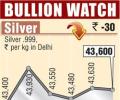
Silver also dived by Rs 600 to Rs 40,600 per kg.

Sensex ends lower; govt schemes in focus.

As the liquidity crunch reaches crisis levels and getting tax refunds remain a big headache, exporters saw orders fall by 15 per cent till October.
Traders said increased buying by stockists and retailers mainly kept gold prices remain higher for the third day.

In 2013, the fall in international gold prices was 28 per cent.

Gold retains gains, gain nearly 3 per cent in the past three sessions.

The 30-share Sensex lost 12 points to end at 29,559 and the 50-share Nifty climbed 4 points to close at 8,914.

The gold market has remained under pressure.

Sensex closed the day 416 points higher.

Telecom stocks fell after Mukesh Ambani extended Reliance Jio's free offers till March 2017.

India's exports dipped deeper in the negative zone.

Silver, platinum and palladium all declined.

India's exports are estimated to have remained at around $312 billion in 2013, while the final figures for 2014 could be around this figure only.

Devangshu Datta highlights the silver lining for the long-term investor.

Bharatiya Janata Party's prime ministerial candidate, Narendra Modi, last month urged small traders to compete with foreign retail chains through e-commerce.

Markets across the globe are rallying on hopes that the US Federal Reserve won't lift interest rates until 2016.

The 30-share Sensex ended higher by 46 points at 26,360 and the 50-share Nifty gained 16 points at 7,891.

In dollar terms, however, gold prices jumped by 26 per cent this calendar year, following sharp jump in hedge funds' long position

Exports to Europe shrank by near 2 per cent in the 11 months.
.jpg)
Returns on godl have depleted in past few years,

Investors booked profits at higher levels despite the growth oriented Budget.

At a time when the whole world is going ga-ga over stocks and debt is too easy to borrow, do not forget gold, says Anil Rego.

Gold prices fell to a 5-year low of less than $1,100/ounce.
A weaker rupee might stimulate Indian exports and nullify some of the effects of Chinese devaluation.
